
Judicial Management: How to Freeze Lawsuits & Save Your Company
Learn how to navigate judicial management and freeze lawsuits to protect your company. Expert guidance on the process and benefits.

March 9, 2026 · 13

Table of Contents
What if your company could hit pause on all lawsuits and creditor demands to focus on a real recovery? For businesses in Singapore facing financial distress, this is not a theoretical question.
This powerful court-supervised restructuring process is governed by Singapore’s Insolvency, Restructuring and Dissolution Act 2018. It offers a vital lifeline.
The mechanism provides essential breathing space. It allows a struggling firm to stabilize operations and negotiate with creditors under court protection. The goal is rehabilitation, not liquidation.
This article serves as a comprehensive guide. We will explore how this formal insolvency process can protect your company and provide a path forward.
Introduction: Judicial Management as a Rescue Tool in Singapore
For a financially distressed firm, the primary goal shifts from daily survival to securing a future through rehabilitation. Singapore’s corporate insolvency regime provides a formal pathway for this critical transition.
Governed by the Insolvency, Restructuring and Dissolution Act 2018 (IRDA), this process offers essential breathing space. It allows a struggling company to be nursed back to health or to achieve a better outcome for its assets than a forced liquidation.

This represents a fundamental shift in philosophy. The focus moves from winding up a business to preserving its operations, protecting jobs, and maximizing value for all parties involved.
The court-supervised procedure balances the interests of creditors, shareholders, and employees. It is particularly valuable for firms with solid underlying operations facing temporary cash flow challenges.
Drawing on international best practices, Singapore’s framework provides a robust rescue tool. This article explores how it works and offers practical guidance for directors considering this option.
Understanding Judicial Management in Singapore
Singapore’s legal system provides a structured framework for companies in financial distress to reorganize and avoid closure. This court-supervised rescue procedure is designed to rehabilitate a struggling business. Its core goals are to preserve operations, save jobs, and deliver better outcomes for all stakeholders than a forced shutdown.
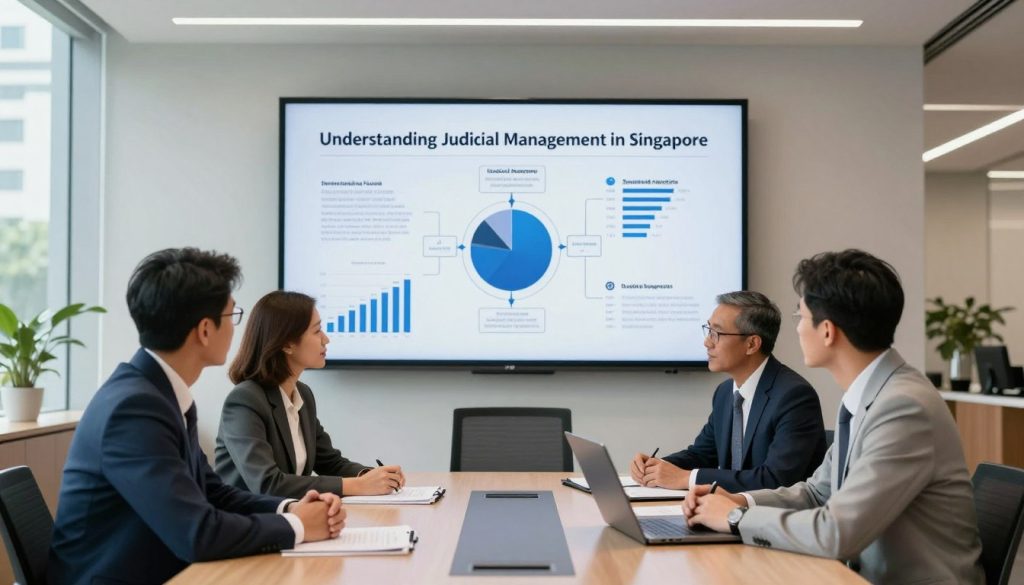
When should a firm consider this path? It is suitable when a company cannot pay its debts but has a viable core business. The aim is to achieve survival or a more advantageous settlement for creditors.
The statutory objectives focus on the company’s survival as a going concern, approving a compromise with creditors, or ensuring a more beneficial realization of assets than in liquidation.
An independent, court-appointed professional takes control to implement a restructuring plan. This offers a protected environment with an automatic freeze on lawsuits. This allows for focused negotiations.
The typical timeline is an initial 180 days, which can be extended. It is a formal alternative to informal workouts. For expert guidance on this statutory procedure, explore our dedicated restructuring services.
Understanding this fundamental structure empowers directors to make critical decisions. It helps determine if this formal rescue aligns with their specific financial situation and stakeholder interests.
Legal Framework and IRDA Overview
At the heart of Singapore’s corporate restructuring framework lies a single, comprehensive statute: the Insolvency, Restructuring and Dissolution Act 2018.
IRDA’s Role in Corporate Restructuring
The IRDA is an omnibus legislation. It consolidates all corporate and personal insolvency laws into one modern code.
This reflects Singapore’s commitment to an efficient regime. It supports debtor rehabilitation while protecting creditor rights.
Key Provisions Governing the Process
Part 7 of the IRDA (Sections 88 to 118) specifically governs the judicial management process. The court applies a strict two-part test before granting an order.
The court may make a judicial management order only if satisfied that the company “is or is likely to become unable to pay its debts” and that the order would likely achieve one or more statutory purposes.
Recent cases have clarified this test. For instance, courts use a cash flow test to determine a company’s inability to pay.
Understanding these foundational provisions is crucial. It provides clarity on rights, obligations, and the court’s supervisory role in any restructuring arrangement.
Initiating the Judicial Management Process
A company’s journey through judicial management officially starts with a court application. This formal petition seeks an order to place the firm under court supervision.
The application can be filed by the company itself, its directors, or one or more creditors. This includes contingent or prospective creditors under Section 90 of the IRDA.
The court may make a judicial management order only if satisfied that the company “is or is likely to become unable to pay its debts” and that the order would likely achieve one or more statutory purposes.
A critical advantage is the automatic moratorium. It takes effect the moment the application is filed. This immediately halts lawsuits and enforcement actions against the company.
Applicants must support their case with a detailed affidavit. This document provides financial evidence and proposes a manager. The court then holds a hearing where creditors can voice support or opposition. Directors should act promptly when distress is apparent to strengthen the case for the order.
Filing Requirements and Court Petition Essentials
The success of a restructuring effort hinges on meticulously preparing the court application and its supporting documents. This formal step initiates the protected restructuring process. It requires strict adherence to procedural rules under Singapore’s IRDA.
Precision here is critical. Any error can delay or derail the entire rescue plan. The court scrutinizes these filings to decide if an order is warranted.
Drafting the Application and Supporting Affidavit
A judicial management application must include a detailed petition and a verifying affidavit. This affidavit provides the court with comprehensive information. It must prove the company is or will likely become unable to pay its debts.
Key information includes the firm’s financial position, cash flow projections, and causes of distress. It should list major creditors and their claims. The proposed manager’s qualifications and evidence of restructuring viability are also essential.
Proper drafting balances detail with clarity. The goal is to satisfy the court’s two-part test. Deficiencies can lead to adjournment or dismissal of the petition.
Advertisement and Service of the Petition
If creditors file the application, they must serve the petition on the company. This must occur within seven days before the scheduled hearing. This ensures the company gets proper notice.
Advertisement of the petition is mandatory. It informs all stakeholders, especially unknown creditors, about the pending proceedings. This allows them to participate in the court hearing.
Courts prioritize expeditious handling of these applications. Hearings are typically set within weeks of filing. This avoids unnecessarily prolonging the interim moratorium on claims against the company.
The prevailing attitude of the courts is to avoid undue delay in the hearing of the petition, as the moratorium restricts creditor rights.
Thorough preparation with experienced advisors is vital for a successful outcome. It ensures all filing requirements are met efficiently.
Role and Responsibilities of the Judicial Manager
When a company enters judicial management, a pivotal figure takes the helm to steer it toward recovery. This court-appointed manager assumes control of the firm’s operations and assets.
The manager’s core role involves a thorough assessment of financial health. They develop viable restructuring proposals and manage day-to-day company affairs. Their goal is to preserve business value and facilitate negotiations with creditors.
Acting with independence, the manager must balance various stakeholder interests. They pursue the statutory objectives that justified the court order.
Interim Manager Appointment Process
Between filing an application and the final order, the court may appoint an interim manager. This occurs under Section 92 of the IRDA. The interim manager exercises specific duties as directed by the court to protect company assets.
Within 90 days of appointment, the manager must send detailed restructuring proposals to creditors. This timeline can be extended by the court if needed.
The manager holds broad statutory powers. These include managing company property, raising financing, and investigating past transactions. Directors must cooperate fully, providing all necessary information for the process.
The Impact of Moratorium on Company Operations
Upon filing a petition, a statutory stay freezes all legal proceedings against the company, offering critical protection. This moratorium is the most immediate and powerful effect of the process.
It creates a comprehensive shield from the moment of application. Creditors cannot start or continue lawsuits. They are also barred from enforcing security over company property or repossessing goods.
Where a judicial management order has been made, no other proceedings and no execution or other legal process shall be commenced or continued against the company or its property except with the consent of the judicial manager or with leave of the court.
This legal standstill provides essential breathing space. The firm can stabilize operations and negotiate without disruptive enforcement actions. It prevents asset dissipation and allows for a focused assessment.
The stay balances company protection with creditor rights. Secured parties can apply to the court for leave to proceed if they face undue prejudice. Certain key obligations, like employee wages, remain enforceable to maintain operations.
Understanding this moratorium’s scope is vital. It is an automatic, court-backed tool designed for legitimate restructuring, not to frustrate valid claims.
Implementing a Scheme of Arrangement for Corporate Restructuring
Restructuring through a Scheme of Arrangement can secure a company’s future by legally modifying its debt obligations. This formal mechanism, governed by Part 5 of the IRDA, provides a statutory framework for compromise.
A scheme is a binding agreement between a company and its creditors. It contains new terms to help the firm meet its debts.
Comparing Scheme of Arrangement and Liquidation
The process begins with a court application to convene creditor meetings. This filing triggers an automatic moratorium, offering immediate protection.
Creditors then vote on the proposed restructuring terms. Approval requires more than half in number and three-quarters in value of those voting.
This majority rule binds dissenting creditors to the scheme. It overcomes individual holdouts that could block a consensual workout.
The court must finally sanction the arrangement. Judges review procedural compliance and ensure the terms are fair to all parties.
Compared to liquidation, a scheme typically delivers superior value. It preserves the going concern value of business assets.
Successful implementation requires careful creditor communication. Realistic restructuring terms must balance debtor viability with creditor recovery.
Creditors’ Rights and Secured Creditors’ Veto Power
The balance of power between secured and unsecured parties is a critical factor in judicial management proceedings. These stakeholders hold key privileges throughout this process. They can initiate applications, oppose petitions, and participate in key decisions.
Section 91(6) of the IRDA grants a statutory veto power to secured creditors holding a floating charge under the terms of a debenture. This allows them to block an application if court intervention causes them disproportionate prejudice. The veto recognizes that these creditors have contractual entitlements to appoint receivers over company property.
Navigating Opposition and Protecting Interests
The court applies a balancing test when secured creditors oppose the process. It weighs the prejudice to the secured party, including potential value erosion, against the harm to unsecured creditors from dismissal. Secured creditors must actively oppose and present evidence of disproportionate prejudice.
Unsecured creditors retain the ability to participate. They can oppose applications on substantive grounds and vote on restructuring proposals. The proposals developed by the manager require creditor approval through voting at meetings.
Stakeholders should engage early with legal advisors. This helps them protect their interests and assess recovery prospects under different scenarios. Navigating these privileges requires understanding both individual protections and collective decision-making.
Developing and Approving Restructuring Proposals
A critical phase begins once the court appoints a manager: the formulation of a concrete plan to rescue the company. Under the IRDA, this appointed professional has a statutory duty. They must send detailed restructuring proposals to creditors within 90 days of the order.
Effective proposals provide a clear roadmap. They include a thorough financial analysis, identify causes of distress, and outline specific actions. These actions may involve asset sales, operational changes, or debt compromises. Credible projections and a realistic timeline are essential for building trust.
The manager presents this plan at a formal creditors’ meeting. Approval requires a dual majority vote. More than half of the creditors present by number must agree. They must also represent over half of the total claim value.
This democratic process ensures broad support. Once approved, the manager must implement the plan to deliver value. Unlike a formal scheme of arrangement, these proposals do not need court sanction. Engaging creditors early to build consensus is a best practice. For professional guidance through this complex approval process, explore our comprehensive services.
Best Practices for Directors and Shareholders in Judicial Management
Navigating a company’s financial distress requires directors and shareholders to adopt specific, proactive strategies. Their coordinated actions are vital for protecting interests and facilitating a successful restructuring under court supervision.
Company directors have a fiduciary duty to consider this formal option promptly when severe financial challenges arise. Delayed action can harm restructuring prospects.
Communication Strategies and Independent Legal Advice
During the process, directors often retain limited day-to-day operational roles under the manager’s guidance. Seeking independent legal advice is a critical best practice for both groups.
For directors, this counsel clarifies their duties, potential liability risks, and how to cooperate fully with the appointed manager. For shareholders, it explains how the process affects their equity interests and voting rights.
Maintaining transparent communication with all stakeholders is equally important. Regular updates on the restructuring progress help maintain confidence and foster the collective commitment needed for a superior outcome compared to liquidation.
Conclusion
This formal mechanism stands as a testament to Singapore’s balanced approach to corporate rescue and creditor rights. The article has detailed how this court-supervised procedure provides essential breathing space for financially distressed firms.
A successful outcome hinges on several factors. Early intervention, realistic restructuring proposals, and achieving creditor consensus are paramount. These steps maximize value for all stakeholders.
The path leads to one of two endpoints. A firm may exit with a sustainable plan implemented. If recovery is unattainable, the process facilitates an orderly realization of assets, often superior to a forced liquidation. Seeking expert advice is crucial for navigating this complex journey and addressing company debts effectively.
FAQ
What is the primary goal of a judicial management application?
How does the moratorium protect a company during this process?
What are the key duties of a judicial manager?
Can secured creditors, like banks, block a judicial management application?
What is the difference between a scheme of arrangement and judicial management?
Why should directors seek independent legal advice early?

September 29, 2026

September 29, 2026

September 29, 2026